


Architect vs Design and Build Firm in Australia: Which Path Suits Your Custom Home?
Updated: Oct 20
What if the choice between an architect and a design-and-build firm is less about how distinctive your home can be, and more about how its design is carried through construction? For anyone weighing up architect vs design and build firm Australia, the answer matters: a well-defined brief, documented decisions and clear responsibilities all help shape the finished home.
You may value an architect’s independent design perspective while also wanting confidence that construction decisions reflect the original vision. An integrated service connects design and building within one engagement, while separate appointments establish distinct relationships for each. The right fit depends on your priorities, the complexity of your project and how you want the work coordinated.
This article explains the roles of architects and design-and-build firms, then compares their approaches to design, coordination, communication and budget planning. Use the practical points to assess which arrangement suits your brief, how involved you want to be and what you need to understand before construction begins.
Table of Contents
Architect vs design and build firm: what does each do?
Both an architect-led project and a design-and-build engagement can result in a distinctive custom home. The difference is how design and construction are organised, and who coordinates the decisions between them. In the architect vs design and build firm Australia comparison, distinguish the work of developing the design from the work of managing its delivery.
An architect typically leads design development, while a design-and-build firm coordinates design with construction under one project engagement. This describes the broad service models, not the quality or individuality of a particular home. The exact responsibilities depend on the agreed scope and project arrangements.
What does an architect do on a custom home?
An architect typically starts by understanding your brief: how you live, what you want the home to feel like and the practical needs the design must address. They may develop early concepts, then refine the preferred direction through decisions about layout, scale, natural light, materials and the relationship between rooms. A general overview of the Architect role provides useful context for this design-led work.
As the design develops, the architect may prepare drawings and other documents that communicate the proposed home in greater detail. These help express design intent and inform later project stages. The architect’s appointment may include additional services, but the scope varies. Check what the agreed work covers, including whether the architect will be involved during construction.
Construction delivery is a separate consideration. Depending on the contracts, you may engage a builder separately, and the architect’s role during construction will be defined by their agreed services. Before proceeding, identify where each appointment begins and ends. In particular, clarify who coordinates information, responds to design questions and communicates decisions as work progresses.
What does a design and build firm do?
A design-and-build firm brings custom design and construction together through an integrated engagement. Instead of design ending before a separate construction relationship begins, the model connects the evolving brief and design decisions with the work of delivering the home. Design, construction and project management are coordinated within one project relationship.
Integration doesn’t remove you from the creative process. Your priorities shape the brief: how the home should function, which spaces matter and what design qualities you value. You review and discuss decisions as the proposal develops. The firm coordinates the design-to-construction pathway, while your input helps make the result personal rather than generic.
Carmel Homes is a family-owned Australian custom home builder with over 30 years of experience. It guides clients from bespoke design through construction and after-care under one project engagement. When comparing the models, consider not only who develops the design, but also how the decisions behind it will be carried forward as the home takes shape.
How architect-led and design-and-build projects carry design into construction
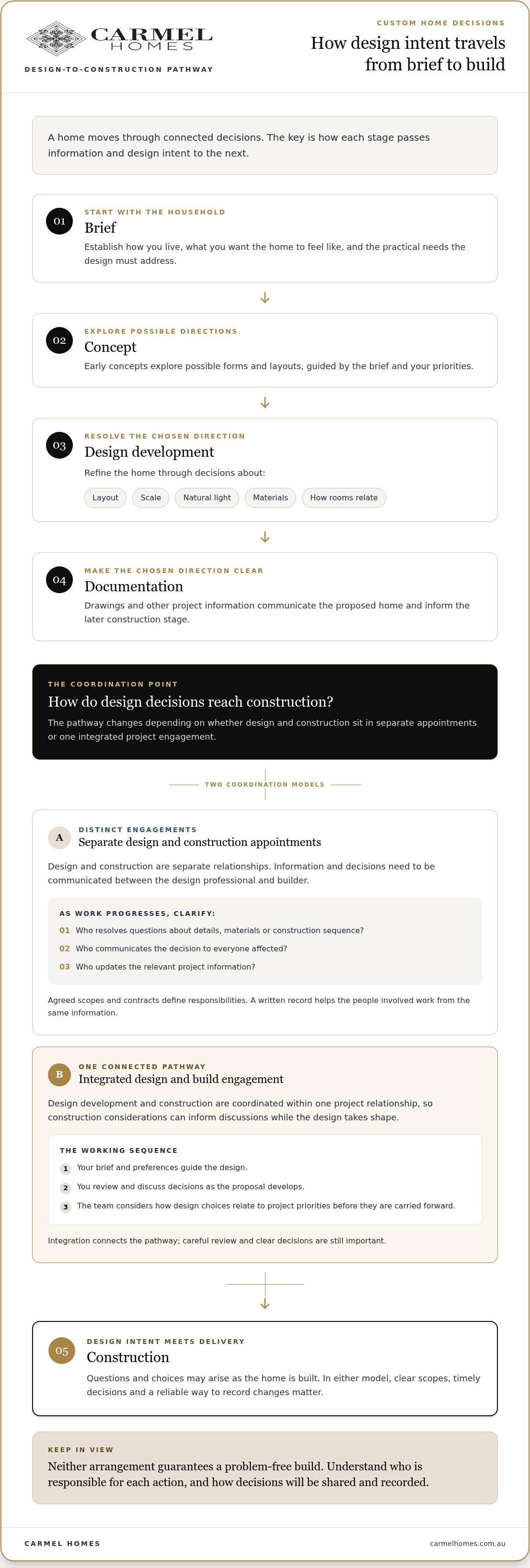
A home passes through a series of decisions before it becomes a built residence. The brief establishes how the household wants to live. Concept work explores possible forms and layouts, design development resolves details, and documentation communicates the chosen direction for construction. At each handover, the people responsible for the next stage need to understand the decisions already made.
The key question is not simply who created the drawings, but how design intent and construction decisions are communicated. Separate appointments involve communication between distinct engagements, while an integrated engagement coordinates design and construction within one project relationship. Neither arrangement guarantees a problem-free build. Clear scopes, timely decisions and a reliable way to record changes matter in both.
When design and construction are engaged separately
With separate appointments, you may need to help keep the design professional and builder connected as the project moves from documented design to construction. The builder might raise a question about a detail, material or construction sequence, while the design team may need to clarify the intention behind it. The response then needs to reach everyone affected and be reflected in the project information.
For example, a decision about a window, junction or finish may prompt a discussion about how it will be built. Before work proceeds, establish who will resolve the question, communicate the decision and update the relevant documents. The agreed scopes and contracts determine who is responsible for each action. Keeping a written record of decisions also helps the people involved work from the same information.
When design and construction are integrated
In a design-and-build engagement, design development and construction are coordinated along a shared project pathway. Construction considerations can inform discussions while the design takes shape. This gives you and the team a chance to consider how a design choice relates to the project’s priorities before it is carried forward. Careful review is still important; the difference is that design and delivery are part of a connected working relationship.
You remain central to the process. Your brief, preferences and feedback guide the design, while discussion with the team brings practical considerations into the decisions. Responsibilities still depend on the engagement and its terms. Think of integration as a way to coordinate the work, not as a promise that every decision will be straightforward.
Carmel Homes connects custom design, construction, project management and after-care under one project engagement. For homeowners considering the architect vs design and build firm Australia question, this provides a coordinated way to carry an individual brief through the stages of a custom home. Explore Carmel Homes’ custom design and build approach as you consider how you want your project to progress.
Architect vs design and build firm: compare the decision-making framework
A useful comparison looks beyond professional titles to the decisions you’ll make, the working relationships involved and how responsibilities are recorded. In the architect vs design and build firm Australia decision, neither model guarantees a more original design or a smoother project. The result depends on the people involved, the agreed scope and how well the arrangement suits your priorities.
Use the table as a starting point. Then compare the actual scope, contract and communication process for the arrangement you’re considering. Service models can vary, so focus on what is included and who is responsible.
Compare design control, communication and coordination
Both approaches can involve you closely in shaping and refining the design. The distinction is how decisions move between the people responsible for design and construction. Separate appointments can mean coordinating several working relationships. In an integrated arrangement, the functions are connected, but communication still needs to be clear and decisions still need to be recorded.
Compare responsibilities and project fit, not labels alone. An independent design relationship doesn’t automatically produce a stronger result, and integrated delivery doesn’t remove every communication risk.
Compare scope, budget visibility and responsibility
Start by comparing what each appointment includes and how thoroughly the work is documented. An architect’s design fee, the construction engagement and any services during the build are distinct parts of an architect-led arrangement. A design-and-build model brings design and construction together, but the written scope and contract still set out what is covered and how decisions are managed.
Review how the design work is described, what documentation will be prepared, who is responsible for construction and how changes are handled. Look at inclusions and exclusions alongside the overall cost, rather than relying on a headline figure. To understand the decision pathway, identify who leads each decision, who communicates it to the people involved and where responsibility sits under the agreed terms.
Compare the actual scopes and working relationships instead of assuming every architect-led or design-and-build project follows the same pattern. This helps you choose an arrangement that supports the design you value and the way you want the project managed.
Which approach suits your custom home priorities and project?
An integrated design-and-build model doesn’t have to mean a generic or standardised home. A custom residence takes shape through a carefully understood brief and thoughtful design decisions. The practical question is whether the project relationship supports the individuality you want while making clear how design and construction will be managed.
As you consider the architect vs design and build firm Australia choice, weigh these four priorities:
Design ambition: How much do you want to shape the home’s layout, character, materials and details?
Involvement: How closely would you like to participate as the design develops and decisions are refined?
Coordination: Are you comfortable managing communication across separate appointments, or would you prefer design and construction in one engagement?
Responsibilities: Is it clear who will lead decisions, communicate changes and manage each part of the project?
Your answers can reveal which structure feels more natural for the home you have in mind. Neither approach is inherently better. The right fit depends on your priorities, the project and the roles set out in the agreement.
When an architect-led arrangement may suit your priorities
An architect-led arrangement may appeal if you want to develop a design relationship first and arrange construction separately. You can focus on the home’s architectural direction before moving into a separate building engagement. This approach calls for a clear process for communication between the parties, with responsibilities and the handover of design information set out in the agreed scopes and contracts.
When integrated design and build may suit your priorities
An integrated model may suit you if you value a coordinated relationship from custom design through construction. It can still start with a highly individual brief: your preferences, feedback and design decisions help shape the proposal. Set out what matters most, from the function of each room to the home’s overall character. That gives the design process a clear foundation for discussion and refinement.
If you’re replacing an existing home, a knockdown rebuild guide can help you think through that project context as you weigh the delivery model. The choice is about aligning the way you want to design with the way you want the work coordinated.
For a bespoke pathway that brings design and construction together, explore Carmel Homes’ custom design and build approach. Carmel Homes’ single project engagement guides clients from custom design through construction and after-care, keeping the focus on a considered home shaped around an individual brief.
How Carmel Homes brings bespoke design and construction together
The comparison is most useful when it helps you picture how your home could progress from an individual brief to a completed residence. Carmel Homes brings custom design and construction together under one project engagement, connecting early conversations about how you want to live with the decisions that shape the home and its delivery.
Carmel Homes is a family-owned Australian business with over 30 years of experience, offering a design-and-build pathway for homeowners seeking a bespoke result. Rather than fitting a household into a standard plan, the process begins with understanding what matters to you and carries that brief into design and construction. Full-service project management and after-care are also part of the offering.
What a coordinated custom-home engagement covers
Your brief sets out your household’s needs, preferred ways of living and the qualities you want your home to express. Those priorities inform the custom design and the decisions that follow as the home moves towards construction. With design, construction and project management connected through one engagement, the process takes an individual vision through to a built home, followed by after-care.
Your role remains active throughout. Sharing your priorities and responding to design choices helps guide how the brief is interpreted. As the project progresses, ongoing conversations give you opportunities to shape the home and connect what you value with the residence taking form.
A considered next step for your custom home
Before an initial conversation, make a short list of your household’s needs, the spaces you value most and the design qualities that appeal to you. Images, material references or examples of room arrangements can help make your preferences easier to discuss. You don’t need a complete design; a clear sense of what matters is a useful starting point.
From there, you can discuss how your vision could move from concept into construction and how a connected engagement supports the decisions along the way. This helps you assess whether Carmel Homes’ bespoke approach aligns with the priorities you identified through the architect vs design and build firm Australia comparison.
A custom home is a substantial personal undertaking. The right pathway should give your ideas room to develop while making a clear connection between design and delivery. If you’re ready to explore that possibility, Explore a bespoke home with Carmel Homes.
Give your custom-home vision a clear next step
The choice between an architect and an integrated team becomes more tangible when you define what you want your home to make possible. Consider which parts of daily life deserve particular attention, what qualities should give the residence its character and how involved you’d like to be as those ideas take shape. These reflections turn the architect vs design and build firm Australia question into a personal decision about the project relationship that suits you.
You don’t need every detail resolved before starting a conversation. A few priorities, questions and design references can provide a thoughtful starting point for exploring how your ideas could develop and be carried into construction.
Carmel Homes welcomes the opportunity to hear about the home you’re imagining and discuss a considered path from vision to reality. Discuss your custom-home vision with Carmel Homes and take the next step towards a home shaped around the life you want to live.
Frequently Asked Questions
Is an architect better than a design and build firm for a custom home?
Neither is automatically better; the right choice depends on the design relationship and project structure you prefer. In the architect vs design and build firm Australia decision, consider whether you want design and construction engaged separately or coordinated through one project engagement. An architect-led arrangement may suit you if you prefer distinct professional relationships. Design and build may better match your priorities if you value an integrated pathway.
Can a design and build firm create an architecturally distinctive home?
Yes. An integrated arrangement can deliver a distinctive home when the design is developed around your brief rather than selected from a standard plan. Share specific preferences, such as how you want natural light to move through living spaces or how indoor and outdoor areas should connect. Discussing these priorities helps the design team understand what matters and refine the proposal with you. The service model alone doesn’t determine the home’s architectural character.
What is the difference between design and construct and an architect-led project?
Design and construct generally brings design and building delivery together under one contractual arrangement, while an architect-led project may involve an architect and builder engaged separately. Terminology and contractual responsibilities can vary, so focus on the actual agreement rather than the label. Check whether the design scope covers drawings alone or includes services during construction, and establish who coordinates design clarifications once building work begins.
How much does it cost to use an architect compared with a design and build firm?
There isn’t one directly comparable figure because services and contract structures differ. An architect’s fee may cover a defined design scope, while a design-and-build engagement combines design and construction responsibilities. Compare what each proposal includes, such as documentation, project management, construction work and services during the build. Note exclusions and how changes are treated. A clear scope helps you assess the overall commitment without comparing unlike services.
Who manages the construction when I hire an architect separately?
The builder usually manages construction work under the building contract, while the architect’s involvement during construction depends on their agreed scope. If you want the architect to review details, respond to design queries or observe progress, those services should be described in the appointment. Establish who will answer a builder’s question about a specified finish and how the decision will be recorded and communicated to you.
What happens if my design needs to change during construction?
Assess a proposed change before it is carried out so its design implications and effect on the building contract are understood. The relevant parties may need to review details, confirm revised documentation and set out any agreed adjustment to the work. For example, changing a window size could affect more than its appearance. Have the proposed change and its agreed consequences documented before authorising it.
Do architect registration requirements vary across Australia?
Yes, architect registration is administered under state and territory frameworks, so the applicable requirements and processes can differ across Australia. The title “architect” is regulated, but the relevant rules depend on the jurisdiction. If you’re considering an architect for a project, check the current requirements with the architect registration authority in the state or territory where the work is planned. This helps you understand the local framework without assuming one national process applies everywhere.


