


New home construction timeline in Australia: stages and duration
Updated: 6 days ago
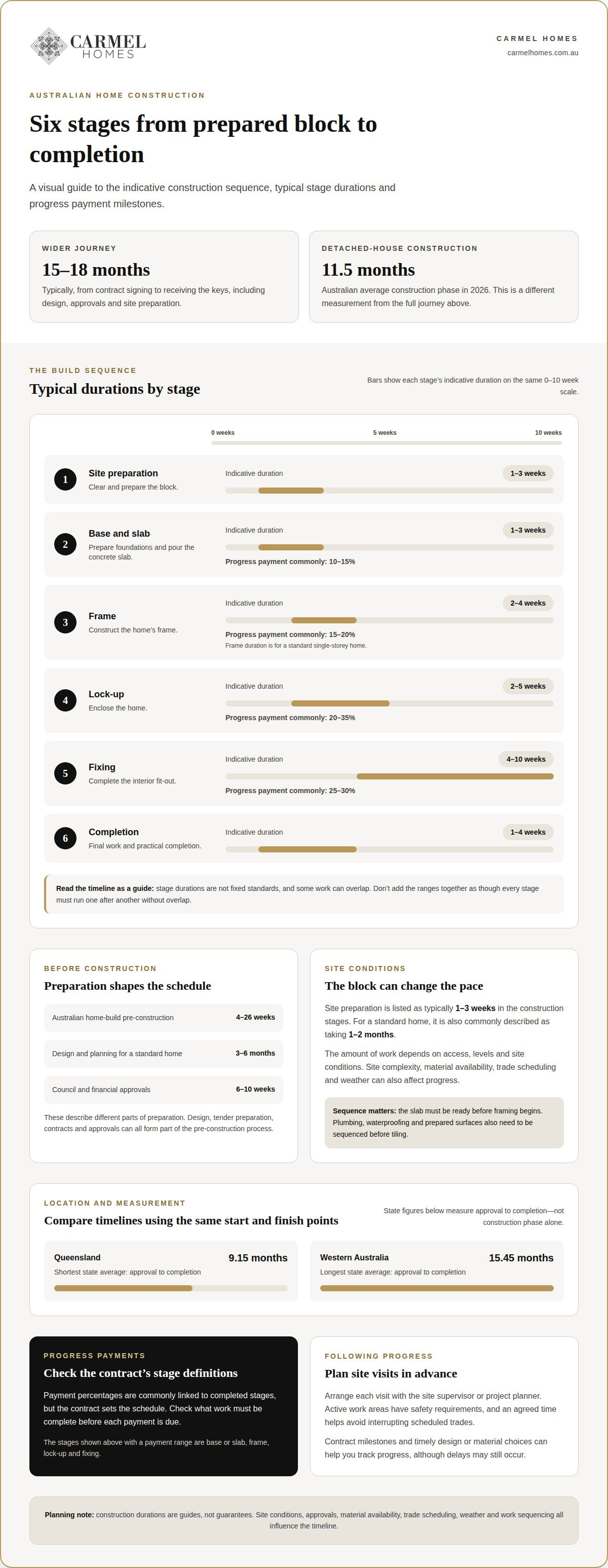
The new home construction timeline in Australia typically runs 15 to 18 months from contract signing to receiving the keys, including design, approvals and site preparation. For detached houses, the average construction phase is 11.5 months in 2026. The six stages are site preparation, base and slab, framing, lock-up, fixing and completion; their durations are planning guides, and some stages can overlap.
It’s understandable to want a clear idea of when each milestone will arrive, especially if you’re planning a move around a major build. Site complexity, material availability, trade scheduling and weather can all affect progress. For safety, arrange site visits in advance with the site supervisor or project planner.
This guide explains the stages of a build, how long Australian homes typically take to construct and how the average detached-home timeline fits into the wider process. It also covers site visits, so you can follow progress and understand the work underway.
Table of Contents
Can I visit the site during construction?
Yes, but arrange each visit in advance with the site supervisor or project planner. Construction sites have active work areas, so visits must follow safety requirements. An agreed appointment also helps avoid interrupting trades during slab work, plumbing installation or other scheduled tasks.
To follow progress, understand the contract milestones and keep decisions moving. Record key dates for approvals, site preparation and construction stages, then make design choices and material selections promptly. This can help prevent avoidable hold-ups, although weather, trade scheduling and material availability may still affect the sequence.
Before work begins, preparation can include design development, tender preparation, contract signing and approvals. Australian home-build pre-construction typically takes 4-26 weeks, while design and planning for a standard home typically takes 3 to 6 months. Council and financial approvals ordinarily take about 6 to 10 weeks. Builders usually handle permits with the local council before construction begins.
The land itself shapes the preparation. Site preparation typically takes about 1-3 weeks, while site preparation for a standard home is also commonly described as taking 1 to 2 months. The difference reflects how much work the block needs: access, levels and site conditions influence what must happen before foundations can proceed.
At the base stage, workers prepare the foundations and pour the concrete slab, which typically takes 1-3 weeks. The slab needs to be ready before framing can begin. Later, wet areas require careful sequencing: plumbing is positioned, waterproofing is applied and prepared surfaces are ready for tiling. Cladding and painting come at later stages, so a completed finish depends on earlier work being ready in order.
Stage durations are planning guides, not fixed standards, and work can overlap. A pre-arranged visit can help you see milestones such as the slab or cladding. Contract dates and timely decisions provide a clearer way to track the wider build.
What Are the 6 Stages of Building a House in Australia?
The construction sequence is organised into six stages, from preparing the block to completion. Their indicative durations help you understand when work and progress payments occur, although stages can overlap.
Construction stages and durations
Each stage marks a distinct part of the build. The base stage includes foundation work and the concrete slab. Knowing the sequence helps you understand visible progress and when trades can move on to the next tasks.
Site preparation: clearing and preparing the block, typically 1-3 weeks.
Base and slab: preparing foundations and pouring concrete, typically 1-3 weeks.
Frame: constructing the frame, typically 2-4 weeks for a standard single-storey home.
Lock-up: enclosing the home, typically 2-5 weeks.
Fixing: interior fit-out, typically 4-10 weeks.
Completion: final work and practical completion, typically 1-4 weeks.
These ranges are broad planning guides, not statutory or industry-standard timeframes. Site conditions, material availability and work sequencing affect durations, and some tasks may overlap. Critical construction stages also require inspection and certification.
Build times by home type
Home type influences the build sequence, but construction duration alone doesn’t capture the full journey. A custom-built home typically takes 12-24 months, while a house and land package typically takes 6-12 months to build. A kit home can take 6 months or less; that figure applies to kit homes, not every prefabricated design.
Design complexity, approvals and site preparation also affect the overall schedule. These factors help explain why a tailored home may follow a different pace from a more standardised build. Not every project proceeds at the same speed. For homeowners who choose to expand an existing property rather than build from scratch, residential building specialists such as Built By LCY Pty Ltd manage comparable staging and timelines for substantial renovations and second-storey additions.
Progress payments are commonly linked to completed stages: 10-15% at base or slab, 15-20% at frame, 20-35% at lock-up, and 25-30% at fixing. The contract sets the payment schedule; inspect the stage definition carefully, as it identifies the work that must be completed before payment falls due.
For a tailored perspective on how design choices shape the build sequence, explore custom home design planning.
Average time to build a detached house in Australia
A detached-home timeline depends on when you start measuring. The national average for the construction phase and state averages from approval to completion describe different periods.
Timelines across Australian states
These state figures show why location matters when setting expectations for a detached-home schedule. In 2026, the average construction phase for an Australian house is 11.5 months. Queensland has the shortest average, at 9.15 months from approval to completion, while Western Australia has the longest, at 15.45 months from approval to completion. Compare schedules using the same start and finish points. Site complexity, material availability, trade scheduling and weather can all affect progress.
Contracts, variations and budget effects
A building contract records the agreed scope, schedule, payment stages and process for variations. A variation changes the agreed work, such as selecting different windows or finishes, and can affect timing and the contract sum. A new home’s price depends on the design, materials, site conditions and chosen inclusions, and is provided after a quote request. Delays can extend temporary accommodation or storage arrangements, so align those plans with the build schedule.
Builder quotes are easier to compare when their scope, inclusions, exclusions, progress payments and variation terms are clearly set out. A low headline figure may cover different work from another quote. Read the contract and attached schedules together to check that the foundation, concrete slab, installed windows and finishing work are accounted for consistently.
Progress payments are tied to construction milestones, not simply elapsed time. The contract should define the work represented by each stage, including lock-up and fixing. Fixing covers interior fit-out, such as cabinetry and skirting. This makes it easier to understand which completed work triggers payment and how a variation may affect the sequence.
Before signing, review the documented scope, proposed schedule, payment stages and process for recording variations. These details give you a practical basis for following progress and understanding how design decisions or delays may change the programme.
Typical Australian home-building timelines
A new home construction timeline in Australia covers design, approvals, preparation, construction and handover, not just on-site work. The overall duration depends on the starting point, so distinguish contract signing, approval and ground works when planning a move.
Design and planning: typically 3 to 6 months for a standard home.
Pre-construction: commonly 4-26 weeks, depending on what the estimate includes.
Approvals: council and financial approvals ordinarily take about 6 to 10 weeks.
Site preparation: typically 1 to 2 months for a standard home.
Construction: a brick single-storey home can take around 5 or 6 months, but often takes longer.
Handover: typically takes 1-2 weeks.
These durations describe different parts of the journey and shouldn’t simply be added together. Design, approvals and site preparation can overlap or vary, while construction-stage ranges are planning guides rather than fixed standards. For a new home construction timeline in Australia, identify the start and finish points before using an estimate to plan accommodation or a move.
On site, work progresses from ground preparation and foundations to framing, enclosure and internal finishes. Trades may complete electrical work during fixing—often engaging residential specialists such as GES Greenera for fittings and fixtures—while plastering, cabinetry and painting bring interiors closer to completion. The sequence matters: an unfinished earlier task can hold up later work, even while the overall programme continues.
Practical completion and handover are related milestones, but they aren’t interchangeable. Practical completion typically takes 1-4 weeks; handover then includes the final arrangements for receiving the keys. Residential projects commonly take between 6 and 24 months, reflecting differences in design, site complexity, materials, trade scheduling and weather. There is no national ABS dataset giving an average duration for each named construction stage, so use stage estimates as guides rather than a universal timetable.
Discuss a tailored home-building schedule to consider how design and site requirements shape the overall programme.
Carmel Homes: Modern Custom Home Designs
Carmel Homes’ Custom Design and Build service brings your priorities into a considered home design and a clearly planned build. If you’re balancing an architectural vision with the practical demands of your site, discuss how design decisions can shape the project sequence.
Modern Custom Home Designs offer an alternative to standardised plans, while French Provincial Luxury Homes provide a more classically styled direction. For an existing property, Knockdown Rebuild creates the opportunity to build a new home on land you already own. Each approach starts with understanding your brief, block and vision for your home.
Contact Carmel Homes to discuss your home-building plans.
Shape the next chapter of your home
A considered new home construction timeline in Australia begins with more than a target handover date. It takes shape as your design, site conditions and priorities come together, so important decisions inform a coherent plan rather than being treated in isolation.
Carmel Homes offers Custom Design and Build for homeowners seeking a residence shaped around their vision, alongside Knockdown Rebuild for those planning a new home on an existing property. French Provincial Luxury Homes offer a distinct architectural direction, with enduring character expressed through carefully considered design.
Start by outlining what matters most: how you live, the qualities you want in your home and the land where it will stand. These priorities can guide a purposeful conversation with Carmel Homes about your design and the build journey ahead.
Contact Carmel Homes about your build, and begin shaping a home that feels distinctly your own.
Frequently Asked Questions
How long does it take from fixing stage to completion?
The fixing-to-completion phase typically takes about 4 to 8 weeks. This period covers interior work such as cabinetry, skirting, painting and electrical fittings, followed by checks before practical completion. The schedule depends on the remaining finishes and trade coordination. For example, a delay completing cabinetry can affect subsequent finishing work, so the sequence matters as much as the task list.
When are the progress payments required?
Progress payments fall due when the contract’s specified construction milestones are reached, rather than at set calendar intervals. The contract explains which completed work triggers each claim and when payment is due. For example, a base-stage claim relates to the work defined for that stage. Read the payment schedule alongside the contract, since the exact triggers and arrangements depend on its terms.
Do I need an independent building inspector at every stage?
No, an independent inspector is not necessarily required at every stage. Australian law requires inspection and certification at critical construction stages, while the specific mandatory inspections depend on state requirements and the building approval. In Queensland, detached Class 1a houses have prescribed inspection stages; in Victoria, the building permit specifies required inspections. An independent inspector is a separate consideration from these mandatory checks.
How long will my building journey be?
A typical Australian home build takes 15 to 18 months from contract signing to receiving the keys, including design, approvals and site preparation. A custom-built home can take 12 to 24 months, reflecting the project’s design and scope. For planning, distinguish the contract-to-keys period from any earlier property search or decisions made before signing.
Is Practical Completion the same as an Occupancy Permit?
No. Practical Completion is a contractual construction milestone, while an occupancy permit is an approval for occupation where required. A new Victorian home generally needs an occupancy permit before occupation. Queensland does not require a certificate of occupancy for a single detached Class 1a house; the owner receives final-stage inspection documentation instead. The relevant document therefore depends on the state and home type.
How long does it take to build a new home in Australia from planning to handover?
For a standard Australian home, the overall journey is typically 15 to 18 months from contract signing to key handover, including design, approvals and site preparation. Design and planning alone typically takes 3 to 6 months, so the clock’s starting point matters. Site complexity, material availability, trade scheduling and weather can influence how the programme unfolds and when handover takes place.


