


How Long Does a Custom Home Build Take? Include Approvals
A bespoke home’s timeline begins well before construction reaches the site. If you’re asking how long a custom home build takes in 2026, custom and architect-designed homes in Australia typically take 18-24+ months from start to handover; a standard single-storey home in a metropolitan area typically takes 12 to 18 months from signing the build contract to receiving the keys.
It’s natural to focus on the construction period, but the full custom-home timeline also includes design, engineering and approvals. How long it takes depends on the home’s complexity, the site and the approval pathway.
This guide explains how design decisions and council approvals affect the overall timeframe, and how the stages connect from early planning to handover. You’ll get a clearer picture of what to expect and why resolving the design early makes the schedule easier to plan.
Table of Contents
Does the timeline include getting council approval?
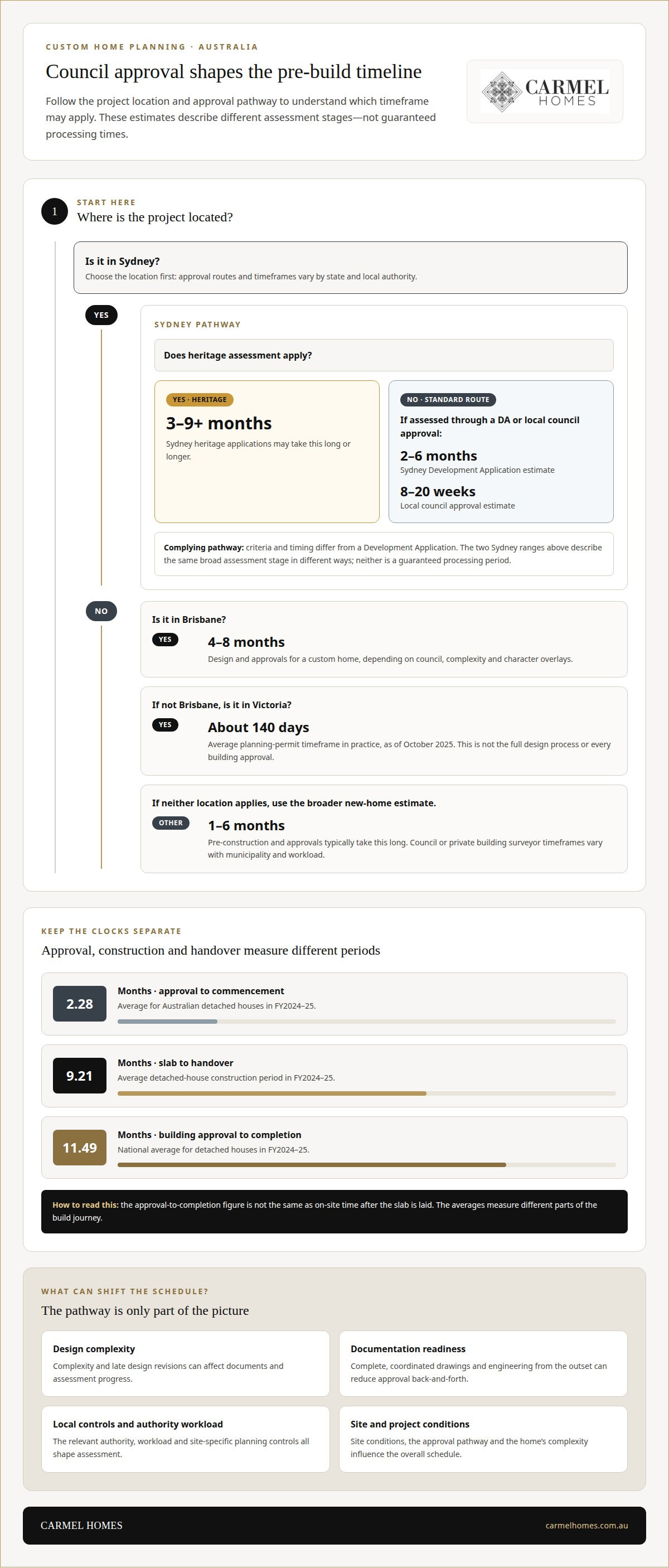
Yes. A realistic schedule includes design, approvals and construction, rather than starting the clock at excavation. Pre-construction and approvals typically take 1-6 months for a new home build. Council or private building surveyor timeframes vary with municipality and workload. The approval-to-commencement period for Australian detached houses averaged 2.28 months in FY2024-25. From building approval to completion, the national average was 11.49 months for detached houses in FY2024-25.
Construction stages explain how that period unfolds. The base and slab stage generally takes 2-4 weeks, followed by framing and structural work. Lock-up typically involves enclosing the home with external cladding, windows and doors. Roofing and external closure protect the interior as work progresses. Fitout, including internal linings and plumbing and electrical rough-in, takes 8-12 weeks. Fixing and finishing, such as tiling, joinery and painting, takes another 8-12 weeks. Practical completion, final trades and cleaning take 4-6 weeks.
From slab to handover, detached-house construction averaged 9.21 months in FY2024-25. This differs from the shorter stage estimates, which describe individual construction tasks, not the full sequence. Scheduling, site conditions and design complexity can affect how stages progress and overlap. A double-storey home generally involves additional structural work and stairs, which can increase costs and construction time compared with a simpler single-storey design.
A per-square-metre figure is only a broad cost comparison: the specification, materials, layout and site conditions all affect the final build cost. A tailored home with complex details is not directly comparable with a basic specification. Approvals also affect the timeline, because design documents and any required certificates must be in place before construction begins. When comparing timeframes, distinguish the period from approval to completion from the on-site construction period after the slab is laid.
How Long Does It Take to Build a House in 2026?
For anyone weighing how long a custom home build takes in 2026, the Australian benchmark is 18-24+ months from start to handover. The actual schedule depends on the home, location, land readiness and design complexity.
Typical timelines by project type and location
These timelines cover different project types and locations, so they help set expectations rather than promise a particular completion date. Custom and architect-designed homes typically take 18-24+ months end to end. In Brisbane, a custom home typically takes 12 to 18 months from first conversation to handover, with construction taking 8 to 12 months. Site conditions and trade availability can affect progress around Australia.
Sydney custom-home timeline
A Sydney estimate can refer to planning through handover or to construction alone, so identify its starting point. From first consultation to handover, a Sydney build typically takes 12-20 months, while construction takes 8-14 months. Custom homes typically take 10-18 months to build, and luxury homes can take 14-24+ months. The scope and stages counted explain why these estimates differ.
Land-to-keys timeline
The land-to-keys period includes securing a block before design and construction begin. For a titled lot, settlement typically takes 1-2 months; an untitled lot can take 3-18+ months. Across Australia, building a house from the start of the process to receiving the keys typically takes 15-24 months. A Sydney knockdown rebuild example took approximately 18 months from planning to handover, including 11 months of construction.
Custom and project home timeline comparison
For a further perspective on how long a custom home build takes in 2026, compare like-for-like stages. In Sydney, a project home typically takes 8-12 months to build, compared with 10-18 months for a custom home. A standard metropolitan single-storey home typically takes 12 to 18 months from contract signing to keys. Design changes, selections and trade scheduling can affect a project’s progress.
To discuss how your design scope may shape the schedule, explore custom-home timeline planning.
Custom home design & council approval timelines
Design, engineering and approvals sit between the initial brief and construction, and their duration depends on the design and approval pathway. In Brisbane, design and approvals for a custom home typically take 4 to 8 months, depending on council, complexity and character overlays. This is time to resolve the home’s form and prepare the material needed for assessment, not construction time.
In Sydney, design and documentation take 6-12 weeks. The design must be developed into coordinated drawings and engineering, which support the approval application. Complete drawings and engineering from the outset can reduce approval back-and-forth with a surveyor or certifier. Late design revisions may mean documents need updating before assessment can progress, so decisions about layout and specification affect more than appearance.
The approval route also influences the schedule. A Sydney Development Application may take 2-6 months, while local council approval is also estimated at 8-20 weeks. These ranges describe the same broad assessment stage, expressed differently; neither is a guaranteed processing period. Heritage applications in Sydney may take 3-9 months or longer, adding time where heritage assessment applies. A complying pathway has different criteria and timing from a Development Application.
State differences matter. In Victoria, planning-permit timeframes average about 140 days in practice, as of October 2025. That figure concerns planning permits, not every building approval or the full design process. The relevant authority, workload, completeness of documentation and site-specific planning controls all shape the assessment. A permit may also be only one part of the approvals needed before work starts.
A practical custom-home sequence is to refine the design, coordinate engineering, prepare complete application documents, then allow time for assessment and any requested revisions. Resolved drawings help avoid unnecessary document changes. Complex forms, heritage considerations and character overlays call for careful planning. Include these pre-construction stages in the overall schedule instead of counting only the time spent building on site.
How long does a custom home build take in each Australian state and territory
State comparisons can provide context, but approval-to-completion averages are not complete custom-home schedules. They start after building approval, so they exclude the earlier design and approval stages.
Queensland: Detached houses averaged 9.15 months from approval to completion in FY2024-25. Brisbane custom-home timelines also reflect council processes, design complexity and character overlays.
Western Australia: Detached houses averaged 15.45 months from approval to completion in FY2024-25, a longer period than Queensland’s reported average.
New South Wales: The relevant approval pathway, site conditions and any heritage considerations can affect the schedule. Sydney’s assessment process may differ from other locations.
Victoria: Planning permits add a separate consideration to the build schedule. Local requirements and the project’s design affect the time needed before construction.
South Australia: The approval pathway and project documentation influence when construction can proceed; site complexity also shapes the overall programme.
Tasmania: Local approval requirements and the design’s response to its site influence pre-construction timing and the construction sequence.
Australian Capital Territory: Approval processes and the proposed home’s complexity are important when setting a project schedule.
Northern Territory: Approval requirements, site conditions and trade scheduling all contribute to the timing of a custom build.
These differences show why a single national figure cannot predict every state or territory project. The 9.15-month Queensland and 15.45-month Western Australian averages measure detached houses after approval, not custom-home timelines from first design discussion. They also describe FY2024-25, so they are a benchmark rather than a promise for a 2026 project.
For a more useful comparison, separate design and approval time from construction, then consider the location, site and level of architectural complexity. A sloping or constrained block, detailed design and local assessment requirements can change the schedule, even within one state. The project’s starting point matters too: purchasing land and completing approvals before construction are distinct stages. Discuss your custom-home timeline to consider how these factors shape your project.
Carmel Homes: Custom Design and Build
Carmel Homes combines design development and construction through its Custom Design and Build service, shaping an individual brief into a considered home. It’s a natural next step if you’re weighing how design choices, site conditions and approvals may affect the schedule, or if a standard plan doesn’t suit your priorities.
For an existing property, Carmel Homes’ Knockdown Rebuild service lets you plan a new home on the current site. The company also designs French Provincial Luxury Homes and Modern Custom Home Designs, with Full Service Project Management throughout the build. Discussing your design and site early helps clarify the stages ahead and how they relate to your intended handover.
Contact Carmel Homes to discuss your custom home plans.
Shape the next stage of your home journey
Knowing how long a custom home build takes in 2026 is a starting point for shaping a project around your priorities. The next step is to bring your ideas, site considerations and preferred architectural character into one considered brief. That clarity can help guide design decisions and keep the planning conversation focused on what matters most to your household.
Carmel Homes offers Custom Design and Build, including Knockdown Rebuild, as well as French Provincial Luxury Homes. These options suit different aspirations, whether you want a residence tailored to your land or a home with a classical character. A conversation about your vision can help determine how the design and build process fits your project.
Contact Carmel Homes to discuss your build. Your home begins with a clear vision, and considered planning can help bring it to life.
Frequently Asked Questions
Why do builds take so much longer than a decade ago?
Australian detached-house build times were 35.8% longer in October 2025 than ten years earlier. Houses took around 8.5 months to build for most of the 2010s, while current schedules can be affected by approval processes, weather, site conditions, material shortages and design changes. For example, a late alteration can require updated documentation and disrupt the order of planned work.
Are build times getting better or worse?
Over the longer term, Australian detached-house build times have increased, although individual projects can vary. The 35.8% increase compared with ten years earlier indicates a slower overall trend, not a prediction for every new home. Trade availability, scheduling and project complexity can influence a particular programme, so a recent national average should be treated as context rather than an exact handover date.
How can a professional builder and client help speed up a custom home build?
A builder can coordinate design documents, approvals and construction sequencing, while timely client decisions help keep each stage moving. Finalising selections early can prevent changes from delaying permit applications. Having finance approved and progress-payment funding arranged before construction also supports continuity. For example, settling fixture choices before finalising the documentation can reduce the need to revise plans later.
What can cause delays?
Weather, approval timeframes, challenging site conditions, material shortages and design changes can all extend a building schedule. Trade availability and gaps between booked stages may also affect progress, particularly during busy periods. Adverse weather during base, frame or external work can interrupt the sequence. A design change may also require revised documents before the affected work can continue.
What can slow this stage down?
During design and approvals, incomplete or uncoordinated drawings can lead to questions and revisions. Complex site conditions, heritage considerations and local planning controls may need closer assessment. The authority’s workload affects processing time, and changes during assessment can require further documentation. Coordinating drawings and engineering from the outset helps reduce avoidable back-and-forth before the application progresses.
How long does it take to build a custom home in Australia in 2026?
Custom and architect-designed homes in Australia typically take 18-24+ months end to end. That timeframe includes more than construction, so the starting point matters when comparing estimates. A standard single-storey home in a metropolitan area typically takes 12 to 18 months from signing the build contract to receiving the keys. Design complexity, site conditions and approvals shape the overall schedule.


