


12-month maintenance budget for a new build home
A new build still needs upkeep: a useful starting point for the first-year maintenance budget is 1% to 3% of the home’s value annually. A considered 12-month maintenance plan for a new-build home helps separate routine care from defects that should be documented and raised with the builder. If an issue remains unresolved, a clear record of photographs, dates and written correspondence can help you plan the next step.
It’s natural to expect a newly completed home to feel settled, but the first year is also when you learn how its finishes, fittings and systems respond to everyday use and changing weather. Regular checks, alongside a reserve for repairs outside the builder’s responsibility, can make this period easier to manage.
This guide explains what to inspect, how to track cracks, why new homes still need maintenance and how to plan for repairs if the builder does not address an issue.
Table of Contents
1. What should I check during the first year in a new home?
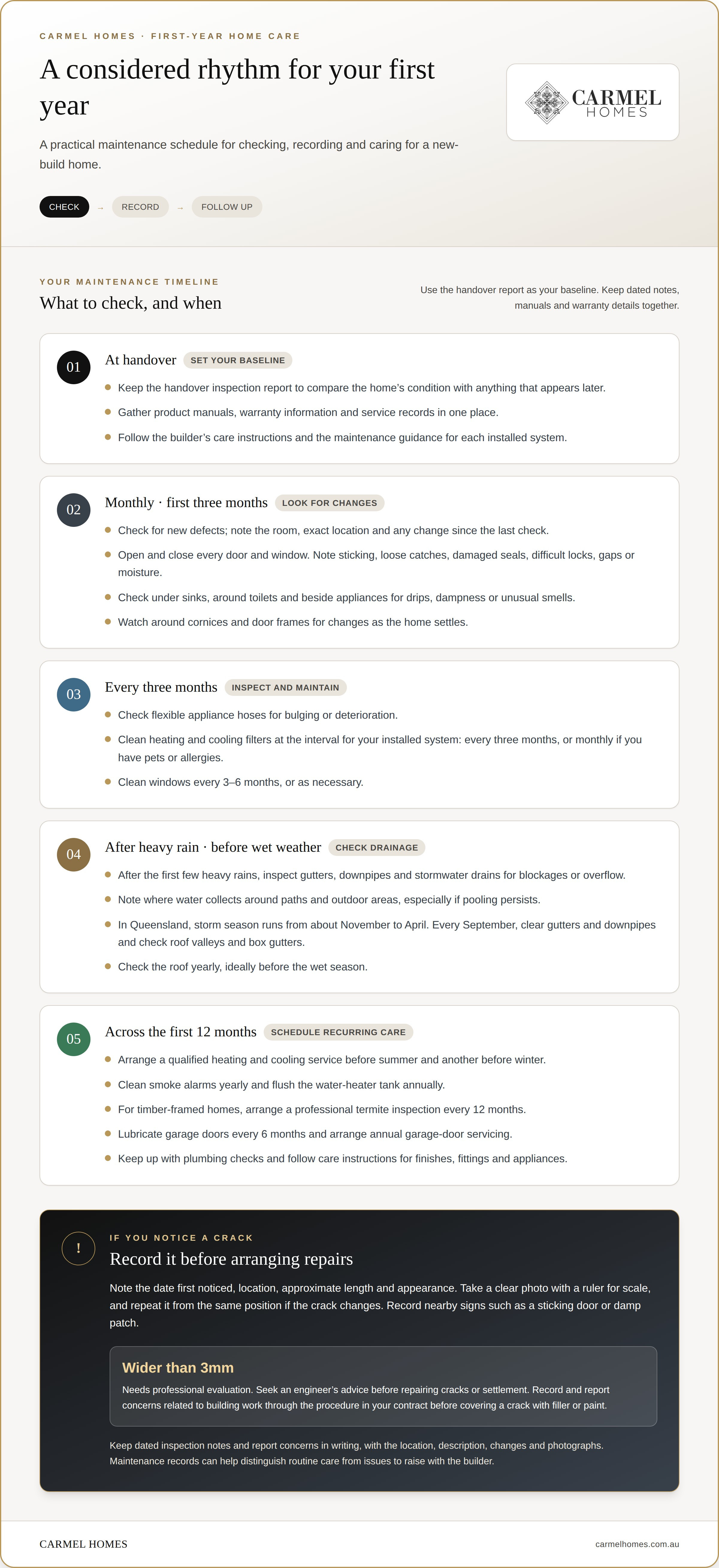
Use the handover inspection report as your starting checklist, then add dated notes as you settle in. During the first three months, check for new defects monthly and record the room, location and any changes. The report gives you a baseline for comparing the home’s condition at handover with issues that emerge later.
Open and close every door and window, noting any sticking, loose catches, damaged seals or difficult locks. Humidity and seasonal changes can make timber expand or contract, so record when a door starts sticking. Check window frames and seals for gaps or moisture, and watch for changes around cornices and door frames as the home settles.
Inspect under sinks, around toilets and beside appliances for drips, dampness or unusual smells. Every three months, check flexible appliance hoses for bulging or deterioration. Follow each appliance manual, and keep product information and warranty documents accessible. Clean heating and cooling filters at the intervals recommended for the installed system: change them every three months, or monthly if you have pets or allergies.
After the first few heavy rains, inspect gutters, downpipes and stormwater drains for blockages or overflow. Note where water collects around paths and outdoor areas, especially if pooling persists. In Queensland, storm season runs from about November to April, so clear gutters and downpipes and check roof valleys and box gutters every September before the season. Check the roof yearly, ideally before the wet season.
For warranty upkeep, follow the builder’s care instructions and product manuals. Check plumbing for leaks, arrange yearly roof checks, and organise a professional termite inspection every 12 months for timber-framed homes. Appliance faults may fall under the manufacturer’s warranty, while installation concerns may need to be reported to the builder.
Clearing leaves from gutters, preventing blockages and following care instructions are part of homeowners’ upkeep responsibilities. Blockages, neglect or accidental damage can complicate a warranty or insurance assessment. Keep maintenance records and report building concerns promptly using the procedure in your contract.
2. What should I do if I notice a crack after moving into a new home?
During the first year, temperature, humidity and ordinary settling can cause minor changes to finishes. Hairline cracks in plasterboard or cornices may appear around door frames and ceilings. Concrete slabs can also develop hairline shrinkage cracks for up to 12 months after pouring. These signs deserve observation, not immediate filling, because changes over time help distinguish stable cosmetic movement from a developing defect.
Document each crack before arranging repairs. Record the date first noticed, its location, approximate length and appearance, then take a clear photograph. Include a ruler for scale and repeat the photograph from the same position if the crack changes. Note nearby details, such as a sticking door, damp patch or crack in a wet area. In Australian homes, this record helps show whether movement or moisture is occurring alongside the visible mark.
Small plasterboard and cornice cracks can occur as a home settles, but monitor them for widening, branching or recurrence. Look for related movement, such as doors or windows becoming difficult to open, or gaps developing between finishes. One fine line is different from several changes appearing together. Keep dated inspection notes so you can describe the pattern clearly when reporting a concern.
Cracks wider than 3mm need professional evaluation. Seek advice from an engineer before repairing cracks or settlement, as movement can sometimes indicate a structural problem. Do not conceal a crack with filler or paint before recording it and reporting a concern related to building work through the contract’s procedure. If moisture appears nearby, note its source and whether it persists after the area dries.
Common first-year defects include hairline cracks, slight wall movement and occasionally sticking doors. Report each issue in writing with its location, date, description and any changes, and attach photographs. Prompt reporting creates a useful record and gives the builder clear information to assess.
3. Do new homes need maintenance during the first year?
Yes. A new home still needs regular cleaning, servicing and care during its first year. Use each product’s maintenance instructions to set your schedule. This helps protect finishes and identify issues before they affect adjoining areas. Keep manuals, warranty details and service records together, so requirements for plumbing, appliances and external materials are easy to find.
Plan heating and cooling maintenance around seasonal use. Schedule a qualified service before summer and another before winter during the first 12 months. Clean air-conditioner filters monthly during heavy-use months, or follow the interval specified for the installed system. A dusty filter can restrict airflow, while a service visit can identify maintenance needs before peak heating or cooling periods.
Use a calendar to make routine tasks visible. Clean smoke alarms yearly, lubricate garage doors every 6 months, and arrange annual garage-door servicing. Clean windows every 3–6 months or as necessary. In the garden, watch for branches or debris that could obstruct drainage, and keep external surfaces clear enough to inspect for changes after heavy weather.
Include plumbing and wet-area care in the annual schedule. Flushing the water-heater tank annually can remove sediment. Check under sinks and around appliances for leaks, and use bathroom and kitchen exhaust fans to manage moisture. For timber-framed homes, schedule a professional termite inspection every 12 months. Follow the care instructions for finishes and fittings, since unsuitable cleaning products can damage surfaces.
Warranty protections are not identical across the country. Under Queensland’s standard New Home Construction Contract, the builder must fix defects that appear within 12 months of practical completion; in South Australia, a contractual maintenance period is not necessarily the end of a homeowner’s legal rights. These points do not describe every state and territory, so keep the contract and defect reports together when tracking your obligations and rights.
A written annual schedule turns home care into manageable tasks. Record service dates, filter changes and plumbing concerns to build a useful history of how the home has been maintained.
4. First-year maintenance budget for new builds
A practical starting point is to reserve 1% to 3% of your home’s value annually for maintenance. Use this as a planning guide, then shape your 12-month maintenance for new build home budget around the property’s systems, materials and care instructions. A new home may need little beyond filters and minor caulking, while drainage or weather-related repairs can require more. Keep routine upkeep separate from a reserve for unexpected defects, including movement around ceilings or other finishes.
Plan your first-year allowance around the home’s actual maintenance needs. Include filter changes, garden care, wet-area sealant checks and regular plumbing inspections. Review your contract and product manuals before arranging paid work, as maintenance instructions and the builder’s obligations affect which costs you may need to cover. Keep receipts and dated photographs with your inspection notes, so your budget reflects completed maintenance as well as planned tasks.
The cause and extent of damage, access and required materials all influence repair costs. A small leak found early is different from prolonged water damage, so respond promptly and keep any written assessment for your records.
A 12-month new-build inspection has no single set cost; the fee depends on its scope, access and reporting detail, and is provided after a quote request. For 12-month maintenance for new build home planning, review the handover report and list concerns under the contract. Arrange a full home walk-through at about 11 months after practical completion, then report new defects before the 12-month mark.
If the builder does not fix an issue, document the defect and the builder’s response before adjusting your repair reserve. Separate routine responsibilities, such as filter changes, from concerns that may relate to building work. This helps you plan for upkeep and make a clear, evidence-based case for follow-up.
Carmel Homes: Custom Design and Build
Carmel Homes offers Custom Design and Build for homeowners planning a residence shaped around their site, preferences and long-term needs. If you’re considering a new home or a Knockdown Rebuild, decisions made during design can help establish the materials, systems and care instructions you’ll use after handover.
Rather than adapting your plans to a standard template, explore a home tailored to your vision, including French Provincial Luxury Homes and Modern Custom Home Designs. Discussing finishes, ventilation and maintenance requirements can help you understand how to care for your home from the outset.
If you’re considering a new build or rebuild, contact Carmel Homes to discuss your plans.
Shape a home that’s considered for the years ahead
Planning 12-month maintenance for a new-build home can also prompt a broader conversation about how a residence will serve you over time. The materials, layout and systems selected during design all become part of the home’s future care, so it is useful to consider daily living alongside appearance and architectural character.
As you begin your building journey, use what you’ve learned about upkeep to clarify your priorities. Consider the finishes you value, how you’ll use each space and the level of ongoing care that suits your household. These preferences can help shape a more personal brief for a new home or rebuild.
For a considered conversation about your plans, contact Carmel Homes for advice. A thoughtful beginning can help you move towards a home that feels distinctly yours.
Frequently Asked Questions
What if the builder won't fix something?
Keep the concern in writing and ask for a written response outlining next steps and the timeframe. Preserve emails, photographs, inspection notes and any written agreement about follow-up work. Keep a record of your communications and actions taken.
Do new homes need maintenance during the first year?
Yes, new homes still need cleaning, servicing and care during the first year. Follow the instructions for installed products and systems rather than assuming new equipment needs no attention. Keep appliance manuals accessible, for example, and note service dates in a home maintenance record. Routine care helps distinguish everyday upkeep from concerns that may relate to the original building work.
Does my builder's obligation end at the 6-month inspection?
No, a six-month inspection is not automatically the end of every builder obligation. Builders commonly schedule a routine maintenance inspection about six months after practical completion. In Queensland, the standard New Home Construction Contract requires the builder to fix defects appearing within 12 months of practical completion. Contract terms and legal rights vary, and a contractual maintenance period in South Australia is not necessarily the end of a homeowner’s legal rights.
Should I wait for the 6-month visit to report a defect?
No. Report concerns related to building work promptly and follow the procedure in your contract. Waiting for a scheduled visit may leave less time to document changes or meet a relevant reporting deadline. Send a dated description with photographs and keep a copy of the message. If the builder agrees to follow-up work, record the agreed action and timeframe in writing.
What should you check after moving in?
As you use each room, test everyday functions and look for signs of leaks or damage. Check smoke alarms using their test buttons, and confirm interconnected alarms sound together where installed. Look beneath sinks, around appliances and in wet areas for dampness. Test the garage door’s auto-reverse, and note any new difficulty with doors, windows, switches or lights.
What documents should I have from handover?
Keep the handover inspection report, building contract, appliance manuals, product information, warranty documents and maintenance instructions together somewhere accessible. Add dated photographs, inspection notes and emails about defects or agreed work. These records help you identify relevant product instructions, explain when a concern appeared and retrieve written commitments without relying on memory.


